




What is a web framework, and what are the benefits?
When starting a new web design project, it is essential to carry out several organisational and planning tasks: defining the web technologies to use, the visual style of the site’s different elements, the working methodologies, delivery timelines, the typography and colours to adopt, and more…
To structure all of this effectively, there are web frameworks: they simplify many development steps and make it possible to create high-performing, high-quality websites.
In this article, we explain what a web framework is and the main advantages it can bring to your project, depending on your needs.
What is a framework?
A framework is a set of tools, code, and pre-defined structures that make it easier to develop software or an application.
It acts as a solid base on which developers can build without starting from scratch, which saves time and reduces effort.
In simple terms, it’s like a construction kit: instead of making each part one by one, the framework already provides ready-to-assemble building blocks. This allows the developer to focus on the application’s specific features, without worrying about the basic technical foundations.
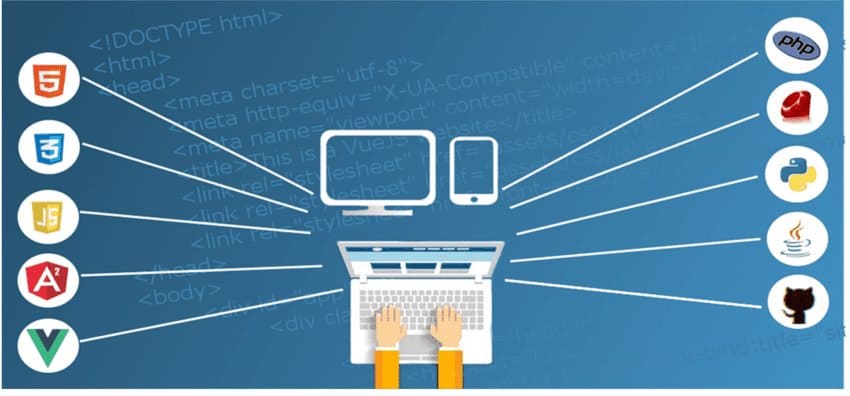
Types of frameworks
There are different types of frameworks, depending on their purpose and the platform on which they are used. Here are the most common:
1. Frontend frameworks
Frontend frameworks are used to develop the visual and interactive part of a web application—everything the user sees and interacts with. They are essential for making web pages attractive, responsive, and easy to use.
Some popular examples:
➤ React.js: Helps create fast, interactive interfaces.
➤ Angular: Used to develop dynamic and complex web applications.
➤ Vue.js: Lightweight and easy to learn—ideal for beginners.
➤ Bootstrap: Makes web design easier with ready-to-use styles and components.
2. Backend frameworks
Backend frameworks handle everything that happens behind the scenes: data storage, information processing, and the overall smooth operation of the website. They are comparable to a car engine: invisible to the user, but essential for performance.
Some popular backend frameworks:
➤ Django: Built with Python, known for its security and speed.
➤ Laravel: Developed in PHP; it simplifies building modern, robust websites.
➤ Express.js: Lightweight and efficient for Node.js applications.
➤ Ruby on Rails: Focused on productivity and ease of use.
Frameworks for mobile app development
These frameworks make it possible to efficiently develop mobile apps for iOS and Android devices:
➤ Flutter: From Google, it lets you create Android and iOS apps from a single codebase.
➤ React Native: Based on React; ideal for building cross-platform apps.
➤ SwiftUI: For creating Apple-only apps with a modern design.
➤ Kotlin Multiplatform: Allows you to code once and deploy across multiple platforms.
Benefits of web frameworks
Now that you know what a web framework is, let’s look in more detail at the benefits it can bring to your development projects.
1 – Documentation and community
One of the biggest strengths of web frameworks lies in the amount of documentation available and the strength of the user community. Developers benefit from tutorials, support forums, and regular updates.
2 – Code reuse
Code modularity is another key benefit.
Thanks to frameworks, it is possible to reuse the same code across several different projects, simply by adapting the text or content.
3 – Architecture and methodology
Most web frameworks are based on modern architectures and methodologies, such as the MVC model (Model – View – Controller).
4 – Template and model support
Templates make developers’ work easier, and many frameworks include them directly.
For example, frontend frameworks like Bootstrap offer a large library of ready-to-use templates and components, developed and shared by a very active community.
5 – Web security
Web frameworks generally include built-in security mechanisms to protect user data and company data. They help prevent common vulnerabilities, a major challenge for all online businesses for many years.
6 – Search engine visibility (SEO)
Search engine rankings are essential to appear among the top results on Google.
Many frameworks already embed good SEO practices into their structure—an important point for a site’s visibility.
7 – Career opportunities
Mastering one or more web frameworks is a major advantage in the job market. Companies increasingly look for developers who can work efficiently with these tools, in order to improve productivity and performance. As a result, these skills can open the door to better job opportunities.
Examples of web frameworks
Depending on the platform you use, there are different web frameworks that may be more or less suited to your needs. Here are the most popular:
→ Angular framework
Widely used by Google developers, Angular is a framework based on JavaScript and built with TypeScript. It is highly appreciated for creating dynamic and complex web applications that require many scripts and interactions. It is based on an MVC architecture (Model – View – Controller).
→ Laravel
Laravel is one of the most widely used frameworks among developers. Thanks to its modern structure and high-quality code, it makes applications easier to maintain, more flexible, and more scalable. It is an ideal choice for developing complex web applications that require a solid, secure foundation.
→ Symfony
Very popular in Europe, Symfony is an open-source PHP framework used to build all kinds of projects. Its free licence allows it to be modified and adapted freely according to your needs. It is known for its easy installation and its large community. In addition, it offers a wide range of templates and components to speed up development. Like Angular, it follows the MVC architecture.
→ Django
Django is an open-source framework based on Python, known for its speed and ease of use.
It allows you to develop all kinds of web projects and can generate content in different formats (HTML, XML, RSS feeds, etc.). Django is particularly valued for its efficient, pragmatic approach to development.
Current trends in web frameworks
The world of web development is constantly evolving. Here are some current trends:
▷ Lighter and faster frameworks such as Qwik and Astro, designed to improve loading speed.
▷ Integration of artificial intelligence, enabling more personalised web experiences.
▷ A stronger focus on security, with frameworks incorporating Zero Trust architecture.
▷ Compatibility with No-Code/Low-Code, making it easier to create applications without full development.
Frequently asked questions about web frameworks
Do you need to know how to code to use a framework?
Not always. Some frameworks are suitable for beginners, but programming basics are still useful.
What is the best framework to start with?
If you are just starting out, Vue.js or Bootstrap are excellent choices for the frontend, and Django for the backend.
Are frameworks free?
Most are open source and free, although some offer premium versions with additional features.
Will a framework make my website faster?
Yes, most frameworks are optimised to improve the speed and performance of websites.
Is a framework the same thing as a JavaScript plugin?
Not exactly. JavaScript plugins add small, specific features (carousel, interactive form…),
while a framework provides a complete structure for building an application.
Think of it like this:
🔹 JavaScript plugins → Standalone tools that add precise functions.
🔹 Frameworks → Complete building plans that enable structured, consistent development.
For example, jQuery is a library that makes DOM manipulation easier, while React is a complete framework for creating interactive web interfaces.
Do you want a high-performing web application powered by modern frameworks?
At illusion Studio, our experts in custom software development are here to help.
Related posts
