




Experts in software integration
Since 2008, we have been designing custom software integrations to connect systems and get more value from data. Our first project? Connecting Navision to the HR management and reporting tools used by Vodafone’s distribution department. The goal: extract customer data and automate marketing campaigns. This project marked the beginning of our approach: unlocking the potential of data through integration.
Since then, we have successfully delivered dozens of custom integrations: ERP, marketplaces, CRM, intranets, extranets, websites, and more. Each project has helped our clients optimise their processes, reduce costs (licences, duplication, resources), and streamline their day-to-day operations.
Before changing tools, think integration. You bring the idea, we make it happen.





What are the benefits of a custom integration for your business?
At illusion Studio, we connect your business applications to streamline data exchanges, automate tasks, and simplify your day-to-day. We analyse your current systems and design custom software integrations, relying either on proven solutions from our internal library (cost reduction) or on bespoke developments based on your needs.
We work with platforms such as HubSpot, Zoho, Odoo, Microsoft Dynamics, SAP, ADP, Factorial, Milena or 360Learning, and many more.
- Automation of manual tasks, thanks to automatic data transfer between systems
- Unified information across departments: customers, sales, HR, invoicing
- Fewer errors, fewer delays, smoother processes
- Better internal organisation and an improved customer experience
- Reliable, up-to-date data to improve decision-making
- Savings by eliminating unused licences
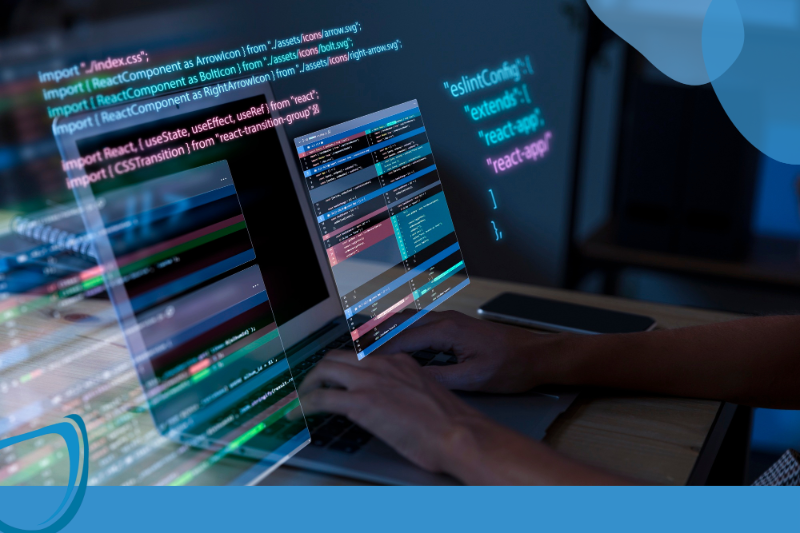
Our integrations make your business faster, better organised and more efficient, without adding technical complexity for your teams.
We deliver integrations through custom software solutions and proven connectors, ensuring stable and secure communication between VisualTime and your entire digital ecosystem.
With our custom integrations, we help you optimise your teams’ time management, reduce administrative tasks, and improve the efficiency of staff scheduling and time-tracking processes.
FAQ on software integration
Every business has its own tools and processes. That is why we apply a tailored methodology to each integration project. Here are the main steps:
1. Initial analysis of tools: We start by studying your existing tools, data flows and business processes to understand how they work and interact.
2. Integration design: In collaboration with your teams, we define the data sources to synchronise, the exchange frequency and the direction of the flows (one-way or two-way), adapting to the specifics of each tool.
3. Development: When possible, we use our standard connectors to reduce costs and timelines. If needed, we develop a custom integration designed to be stable, secure and tailored to your environment.
4. Testing and validation: Before go-live, we run a full set of functional tests to ensure reliable operation from day one.
5. Go-live and monitoring: Once the integration is deployed, we provide performance monitoring, technical adjustments as needed, as well as hosting, security, ongoing maintenance and responsive post-launch support.
With this approach, we ensure that each software integration is efficient, secure and aligned with each business’s growth.
Yes. When a public API is not available, we use other methods: database access, web services or file exchanges. The key is to analyse each step of the process and choose the most reliable and secure solution.
Some platforms limit bandwidth or requests per minute. We design smart queues, batching and proactive monitoring to prevent any blockage.
We implement data validation systems and transaction logs, ensuring synchronisation without errors or data loss.
No. We design asynchronous flows and balance loads so as not to impact your day-to-day operations. Integrations can be configured on a schedule, via hooks, or in real time, depending on your needs.
With continuous monitoring, version control and CI pipelines, we anticipate changes before they affect your connections.
Yes, provided that these systems allow secure access for reading data.
We use timeout mechanisms and data-consistency checks to prevent any loss of information.
Absolutely. Our integrations are modular and designed for horizontal scalability. This allows us to extend the functionality of an existing integration or develop new integrations that can communicate with each other, as we have already done for several of our clients.